Friends of Gualala River Protecting the Gualala River watershed and the species living within it
November 18, 2025
For immediate release from Friends of Gualala River
Contact: Laura Baker, 510-684-4572, Lbake66@aol.com
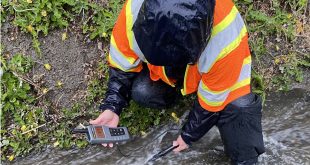
With the return of fall storms, Friends of Gualala River in partnership with The Stream Team and other volunteers have launched their second season of testing Gualala stormwater for a potent toxic chemical found in tire grit.
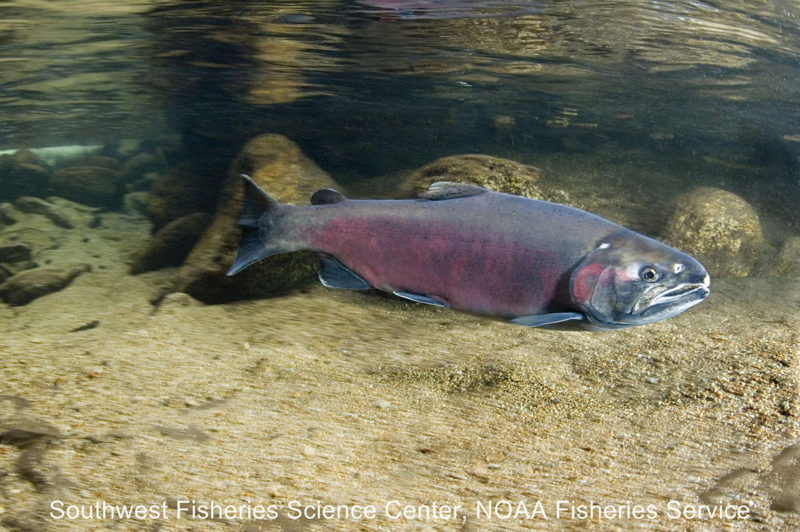
The chemical is extremely hazardous to salmonids, especially coho salmon. Recent sightings of juvenile coho in the upper watershed indicate that there is reason to hope that the endangered population can recover in the watershed.
According to Laura Baker, who first brought up the issue of 6PPD-Q to FoGR in 2023, “We knew from initial research done in 2020 in the State of Washington that the compound, 6PPD-Q, was killing off large numbers of coho in what was originally called ‘urban runoff mortality syndrome.’ The fish were dying within a few hours of being exposed to stormwater runoff before they could spawn.” Baker contacted Timmarie Hamill who heads up the non-profit, The Stream Team, to investigate whether Gualala’s stormwater carries the compound.
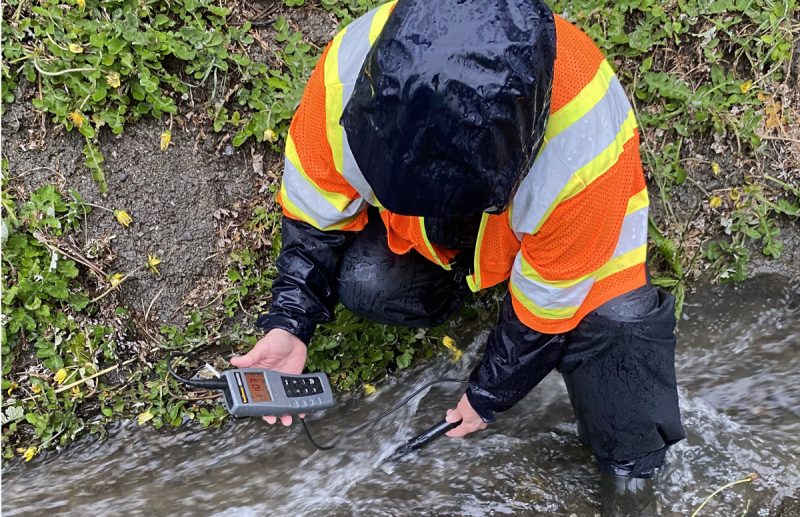
Hamill, who was trained as a fisheries biologist and water quality expert, took on the role of researching the methodology for capturing runoff samples. “Although we’ve known about this compound and the potential threat to our salmon for several years,” Hamill said, “we had to wait until last year when the EPA approved the protocol for the lab test before we could collect samples. The lab test has to be super sensitive down to parts per trillion because 6PPD-Q is so toxic to coho that 4 drops in an Olympic-sized swimming pool are enough to kill off 50% of a population. Once we had the lab protocol, we became one of the first sites in the state to test.”
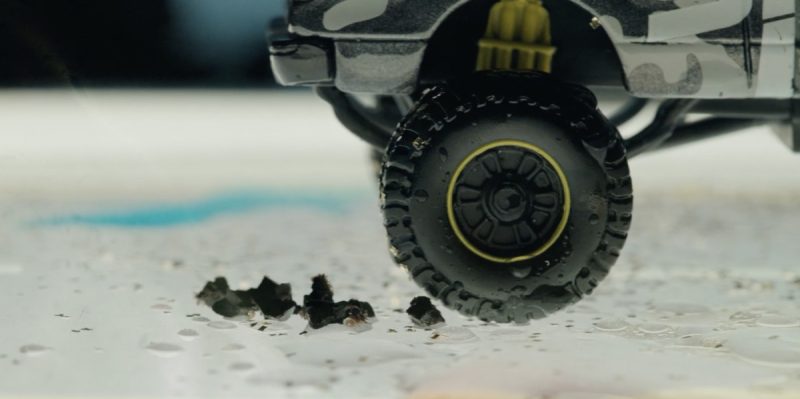
In May of 2024 the team of volunteers ran their first samples and discovered that stormwater runoff from the downtown area of Gualala contains high levels of 6PPD-Q, confirming their suspicions. “It makes sense,” says Baker. “Even though Gualala is a small town in a rural area, we have concentrated traffic, especially trucks, trailers, and other heavy vehicles all using Highway 1. Just one 18-wheeler equals 4.5 cars with super large tires, and we have them coming through town all the time. We also have large paved parking lots. So, the idea that this phenomenon is strictly urban is an assumption that has proved incorrect.“
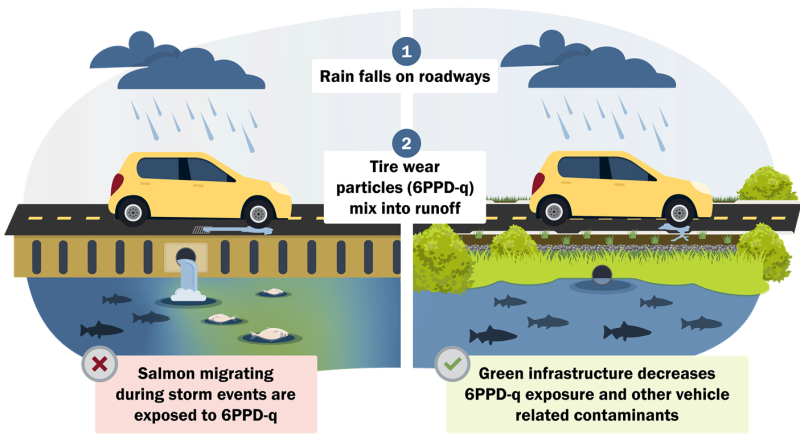
Besides heavy local traffic, the other key factor is the practice of directing untreated stormwater into the estuary / lagoon. According to Hamill, “the effective way of looking at stormwater is that it’s a resource. You capture it from your roof and use it, or you direct it into the ground with green infrastructure practices like installing bioswales and rain gardens to slow it, sink it (which helps treat it), and store it to recharge groundwater. We’ve done this type of low-impact development with school buildings, grocery stores, and other structures in Chico where I live. Gualala’s stormwater system currently works in the opposite way by concentrating untreated stormwater into pipes and shooting it into the estuary / lagoon to prevent flooding.”
After collecting data from different storms for the rainy season of 2024-25 and finding that the 6PPD-Q levels were consistently high, in May the team shared their data with Caltrans, recognizing that there might be a good opportunity to capture and treat more of the stormwater runoff from the then as yet unapproved Streetscape Project. To their knowledge, the topic of 6PPD-Q had never been previously publicly addressed with regard to the Streetscape Project. The team provided two technical memos, one prepared by The Stream Team, reporting the results of testing stormwater for toxins, and the other by their consultant, hydrologist Greg Kamman, recommending conceptual best management practices to treat stormwater run-off.
Although the agency declined to meet with the team, it has in fact expanded the original amount of stormwater mitigation area in the Streetscape. The project was approved at the November 4th Mendocino Board of Supervisors meeting. At the recent November 6th meeting of the Gualala Municipal Advisory Council, Katie Everett, Caltrans Streetscape Project Manager stated, “Caltrans is aware of the presence of 6PPD-Q on our highway systems and has considered this in the stormwater design for the Gualala downtown enhancement project . . . the current project design will promote infiltration throughout the project . . . Treatment Best Management Practices have been implemented . . .”
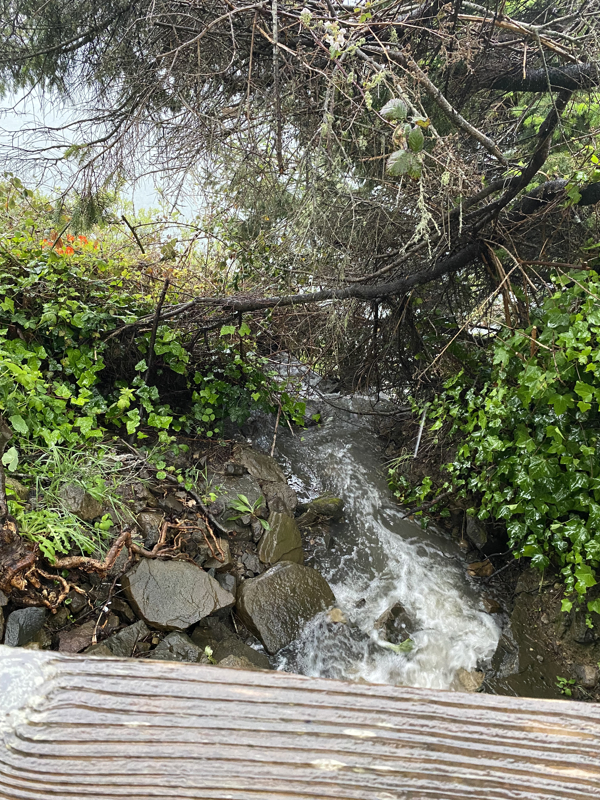
between the Hotel Breakers and the Surf Market
While FoGR and The Stream Team recognize this initial progress, they will continue their monitoring of stormwater after the Streetscape project is built since a sizable amount of runoff will not be fully treated for 6PPD-Q — specifically the water that drains the central portion of the project which contains some of the largest concentrations of 6PPD-Q and runs along the open drain between the Hotel Breakers and the Surf Market. This drain is also a site that creates erosion along the scenic Bluff Trail where the outfall dumps into the estuary / lagoon.
Lab tests for 6PPD-Q are very expensive (hundreds of dollars per sample).
If you would like to support this work, please donate to Friends of Gualala River.

Donate using credit card or Paypal
or send a check to:
Friends of Gualala River
P.O. Box 1543
Gualala, CA 95445
For more information
- Do Your Part to Reduce the Release of 6PPD-Q into the Watershed
- Results of testing Gualala stormwater for toxins
- Streetscape Project: Best management practices to treat stormwater run-off
- Treating salmon-killing tire chemicals
- What’s In Our Stormwater?
- Why are salmon dying? The answer washed off the road
- Fishing Industry Groups Notify Tire Companies of Intent to Sue Over 6PPD Impacts to Salmon, Steelhead