Friends of Gualala River Protecting the Gualala River watershed and the species living within it
by Mandela Linder, The Mendocino Voice, January 24, 2026
[excerpt:]
MENDOCINO CO., 1/24/26 — After decades of decline, endangered coho salmon have returned to the coast in numbers that more than double the targets set by habitat restoration projects. In 2008, just 5,000 coho were estimated across the entire state, one percent of their historic numbers; over the winter of 2024-25, more than 30,000 were counted in Mendocino County alone, showing that recovery is possible. Conservationists say that while it’s still too early to tell what this season’s numbers might be, it’s looking promising for another good year.
Over the past decade, the Nature Conservancy, Trout Unlimited, the Mendocino County Resource Conservation District, NOAA Fisheries, California Department of Fish and Wildlife, local landowners, tribes and other partners have restored habitat across the Ten Mile, Navarro, Big River, and Noyo River watersheds. Their work has included building side channels, off-channel ponds, large wood structures, and wetlands to support juvenile coho salmon. These structures give young coho salmon safe places to hide from predators, slow-moving water to rest in during storms and abundant food, creating the kind of habitat they need to survive winter storms and grow before heading to the ocean.
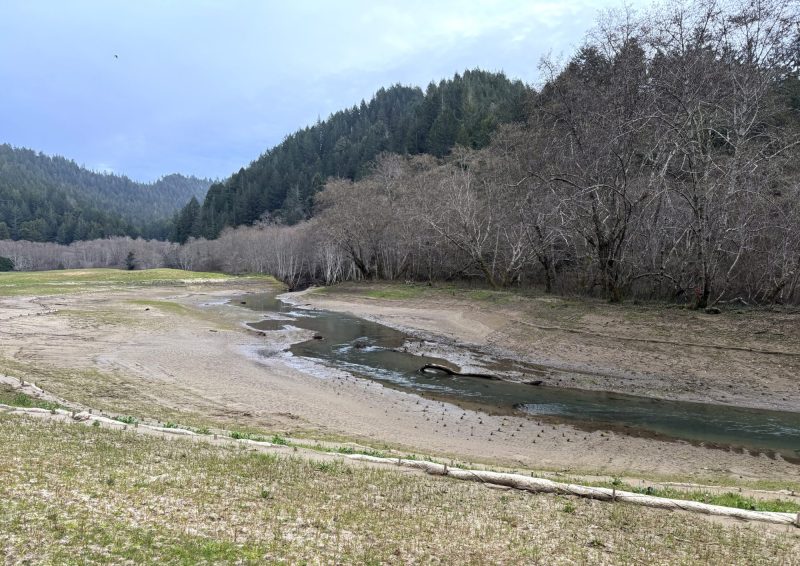
Coho salmon were listed as threatened in 1996, and by 2005 were officially endangered due to decades of habitat loss from logging, erosion and sediment from road construction and upgrading, and environmental changes that left rivers and streams inhospitable for spawning. By the early 2000s, populations had plummeted statewide, and restoring the rivers and floodplains became a priority for both conservationists and local landowners, who wanted to give the species a chance to recover.
. . .
“Timber, agriculture and land clearing have affected the habitat that they need to survive their fresh water life cycles. That includes clearing hillsides, and all the sedimentation that occurs, rerouting of a lot of streams, watersheds; they’ve basically been converted into timber conveyance systems,” Van De Burgt said.
. . .
To read the entire article, visit The Mendocino Voice:
Restoration efforts spark remarkable comeback for coho salmon on Mendocino Coast