Friends of Gualala River Protecting the Gualala River watershed and the species living within it
This article is a brief overview.
See all of the articles from the Water Quality campaign.
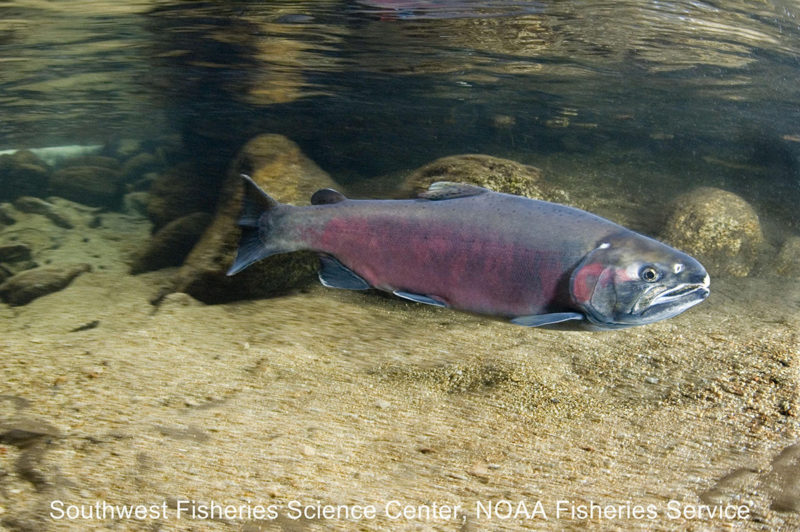
Historically, the Gualala River was home to abundant coho salmon and steelhead trout populations that numbered in the tens of thousands. Today, the endangered coho salmon are all but gone and threatened steelhead are struggling to survive in the home river they evolved and adapted to over millennia.
The dwindling salmonid population is a critical indicator of the declining health of the Gualala River, and its 300 square mile watershed, and continues to be at the core of Friends of Gualala River’s work.
FoGR is working with state agencies to reduce water quality impairments from both sediment pollution and pollution from stormwater run-off containing toxic tire grit.
Sediment

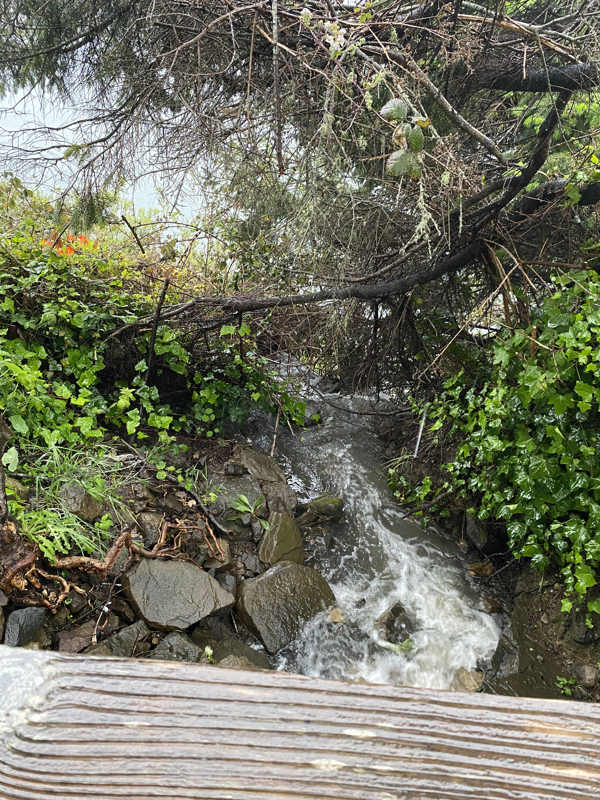
sheds into the North Fork during winter flows.
Sediment – In 2001, the U.S. Environmental Protection Agency (EPA) listed the Gualala River as impaired under the Clean Water Act due to excessive sediment and high temperatures – both conditions that hamper fish spawning and create unhealthy conditions for fish throughout their lifespan. The chief sources of sediment are roads, landslides, and legacy timber harvesting practices.
California agencies failed to develop plans to reduce sediment and temperature for 20 years. In 2021, Friends of Gualala River (FoGR) petitioned the State Water Resources Control Board and North Coast Regional Water Quality Control Board to incorporate the EPA’s Gualala River Total Maximum Daily Load (TMDL) for sediment into the North Coast Basin Plan and to develop and implement an action plan specifying how sediment pollution will be reduced throughout the watershed.
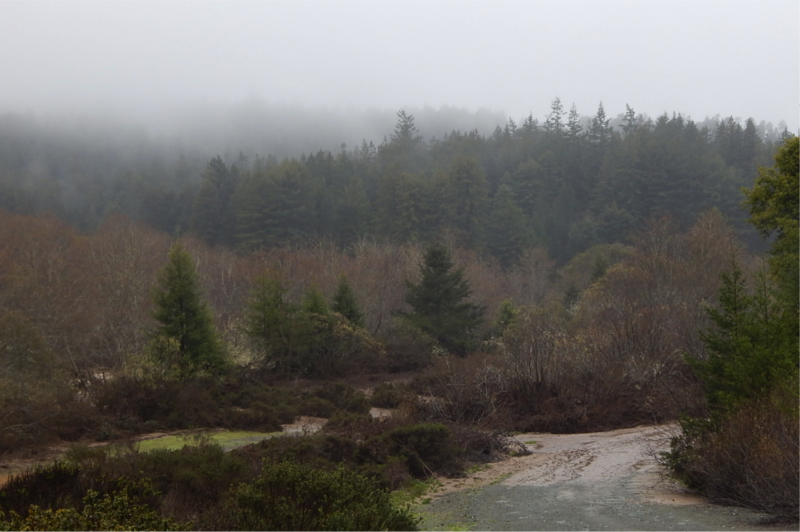
Wheatfield Fork Gualala River, Valley Crossing (2019).
The State and Regional Water Boards remained unresponsive to FoGR’s request to adopt the Gualala River’s TMDL and a corresponding implementation plan to improve water quality, so FoGR finally sued the Water Boards to compell them to do so, as required by the EPA Clean Water Act.
The Water Boards settled the lawsuit and agreed to incorporate the TMDL and develop an implementation plan. FoGR achieved a major accomplishment that will help improve water quality and reduce sediment pollution in the Gualala River and its tributaries – a pivotal step in assisting salmonid recovery efforts.
Now that FoGR has successfully negotiated an agreement, work can begin in earnest to restore the impaired Gualala River and its tributaries. The Regional Water Board adopted the Action Plan for the Gualala River Sediment TMDL in February, 2026, and is developing a Gualala Roads Assessment Order, a watershed-specific order that will address sediment pollution by requiring the inventory, assessment, and prioritization of sediment-generating roads.
Stormwater
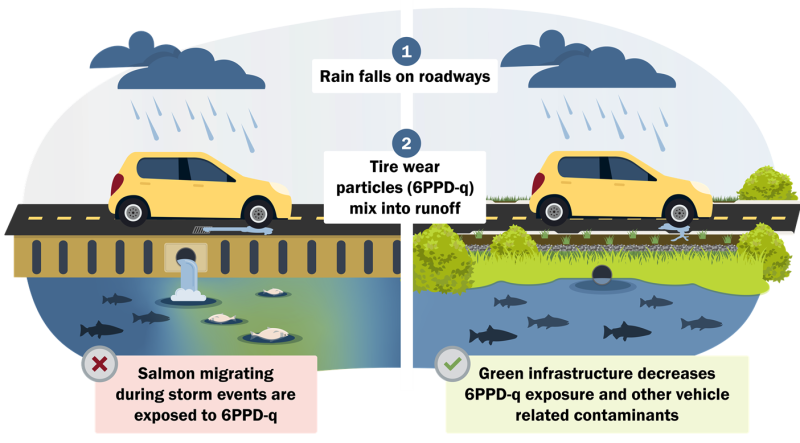
Stormwater – In 2020 Friends of Gualala River (FoGR) learned of a chemical found in tire grit that pollutes stormwater and kills a number of different aquatic species. It is especially toxic to coho salmon— 40 parts per trillion in a quart of stormwater kills juvenile coho. Information has been pouring out of the State of Washington where the effects of 6 PPD were first discovered as scientists race to learn more about how the compound kills and what can be done about it.
Friends of Gualala River is proud to partner with California Urban Streams Alliance – The Stream Team to demonstrate the power of citizen science in protecting and understanding the Gualala estuary and lagoon. Through The Stream Team approach, community volunteers work alongside trained coordinators to collect valuable baseline water quality data once a month on the third Saturday from May through October. Volunteers meet at the kayak launch at 9:00 a.m. and receive hands-on training in approved Water Board monitoring methods, allowing them to collect and analyze river water samples for dissolved oxygen, pH, turbidity, and other important indicators of ecosystem health.
By following standardized protocols, the data collected can be entered into the California Environmental Data Exchange Network (CEDEN), where it becomes a valuable resource for scientists, agencies, and local decision-makers working to protect coastal watersheds. Just as importantly, this long-term monitoring effort documents seasonal and year-to-year changes in estuary conditions while highlighting how dedicated community members can help fill critical environmental data gaps.
The Stream Team model shows that when local residents are empowered with training, tools, and shared purpose, citizen science becomes a powerful force for watershed stewardship and informed resource management.
In 2022, The Stream Team expanded its long-standing watershed monitoring program and began collaborating with FoGR to investigate 6PPD-Quinone (6PPD-Q)—a tire-derived pollutant highly toxic to Coho Salmon and Steelhead—in the Gualala River estuary.
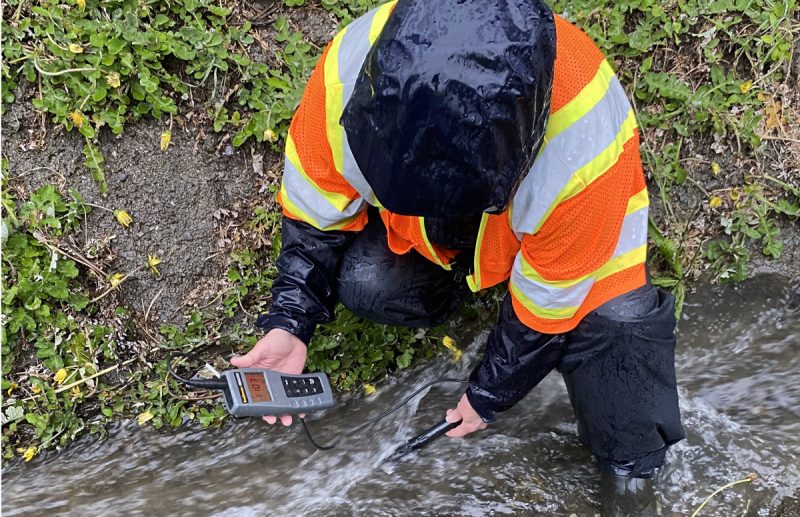
Photo by Laura Baker
In May of 2024 the team of volunteers ran their first samples and discovered that stormwater runoff from the downtown area of Gualala contains high levels of 6PPD-Q, confirming their suspicions. “It makes sense,” says Laura Baker. “Even though Gualala is a small town in a rural area, we have concentrated traffic, especially trucks, trailers, and other heavy vehicles all using Highway 1.”
Storm-event samples were collected at four sites upstream and downstream of major road surfaces and analyzed for 6PPD-Q, zinc, oil and grease, and standard field parameters. Results show elevated 6PPD-Q (up to 170 ng/L), zinc, conductivity, and turbidity, with highest concentrations at sites influenced by Highway 1, gas stations, and parking lots.